.png?width=134&height=45&name=Logo%20MyRay%20(2).png "Logo MyRay")
-1.png)

-1.png)
Artificial intelligence is no longer a futuristic promise, but a concrete reality that is transforming the way dental practices work. What seemed like science fiction just a few years ago is now accessible technology that improves diagnosis, planning and patient management in tangible and measurable ways.
Digitalisation has already profoundly changed dentistry. AI represents the next step in this evolution: from automatic image analysis to the generation of clinical reports, from implant planning to virtual assistants for patients. Practical applications are growing rapidly, and the most innovative practices are already experiencing the practical benefits of this technology.
What are the real benefits for professionals and patients? And what critical issues must be considered before integrating AI into daily practice? Let's take a look.
The concrete benefits of AI for dental practices
1. More accurate diagnoses with intelligent radiographic analysis
Diagnostic imaging is the area in which AI is having the greatest impact. Deep learning algorithms analyse thousands of panoramic X-rays, CBCT and intraoral scans, learning to recognise lesions and abnormalities with accuracy comparable to that of an experienced practitioner. The system identifies occlusal or interproximal caries, periapical lesions, bone resorption and early signs of periodontal disease. The result? Fewer missed diagnoses, more timely interventions and greater safety, especially in ambiguous cases or with paediatric and geriatric patients, where early diagnosis really makes a difference.
2. Fast and accurate planning
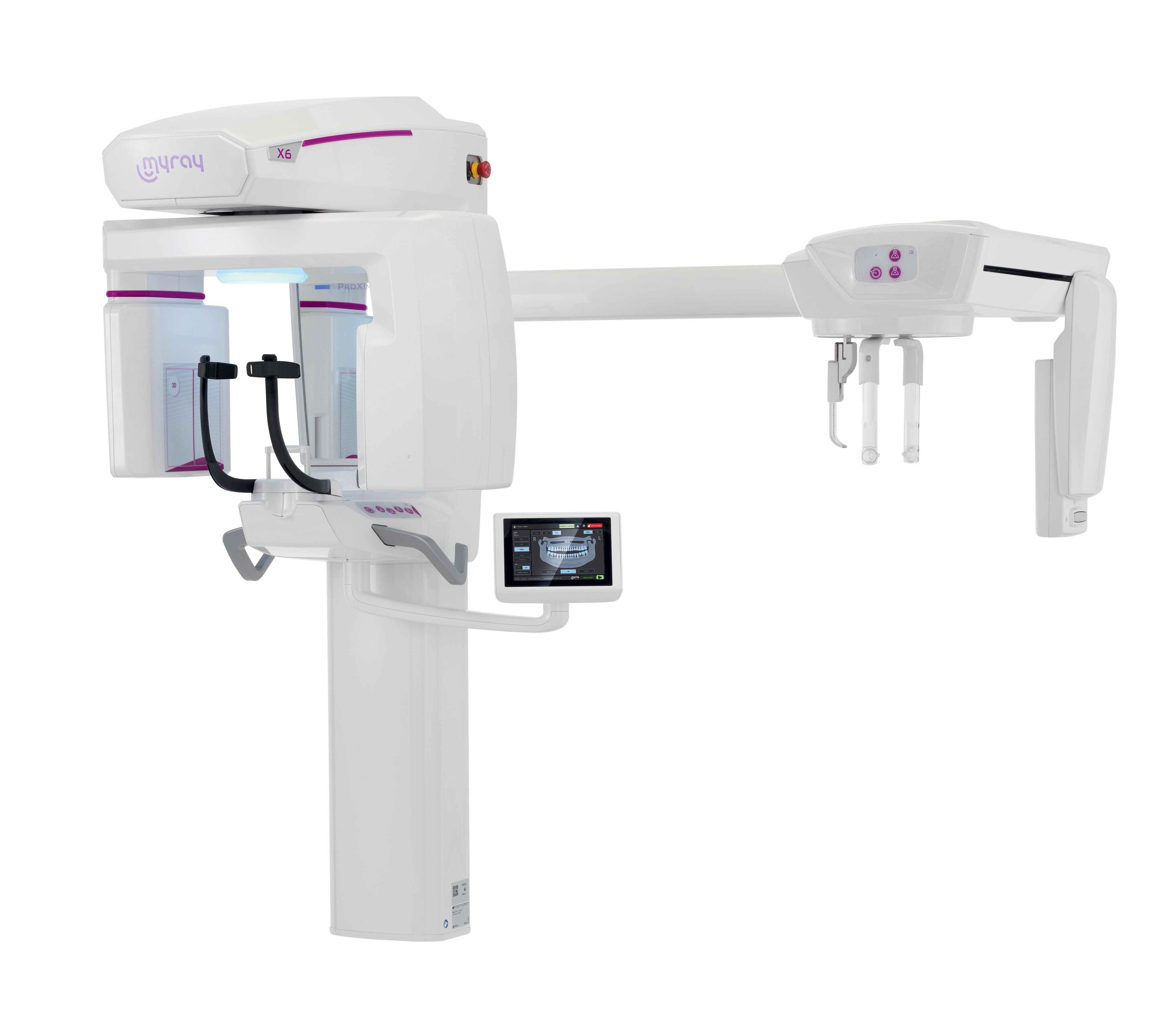
Preparing a complex clinical case takes time and precision. Platforms with built-in artificial intelligence, such as MyRay's Neowise , automate the most repetitive and time-consuming processes:
- Automatic tracking of the inferior alveolar nerve
- Precise matching between CBCT volumes and intraoral scans
- Automatic segmentation of anatomical structures
This translates into time saved, fewer manual errors and greater focus on decision-making for the practitioner. Technology does the "dirty work", allowing the professional to focus on the treatment strategy.
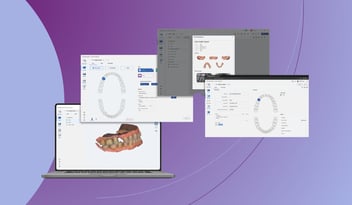
A practical example of digital planning >> Let's imagine we need to plan a complex procedure. We start with CBCT acquisition, which provides a complete 3D model of the jaw. We add an intraoral scan, which eliminates traditional impressions and creates a digital model of the dental arch. In Neowise, these data integrate perfectly: it is possible to plan treatment virtually, taking into account anatomy, bone quality and the final result. Everything is fluid and integrated. The process becomes faster, safer and more predictable. And the patient is well aware of this.
3. Less time for paperwork, more time for clinical work
Reports, medical records, documentation for insurance companies: bureaucracy takes up valuable time at the clinic.
AI automates these processes through advanced speech-to-text systems and intelligent templates. The practitioner dictates, and the system transcribes and organises everything in the file in real time. In orthodontics, MyRay technologies generate complete cephalometric analyses in less than 30 seconds from the image alone.
A process that traditionally took a long time is now completed automatically, leaving the professional more time for interpretation and communication with the patient.
4. Happier patients, more efficient practice
Chatbots and AI-based virtual assistants are changing patient management through:
- Immediate answers to frequently asked questions
- Autonomous management of appointments and reminders
- Pre- and post-operative support available 24/7
- Personalized and timely communications
Staff are freed from repetitive tasks and can focus on high-value interactions. Patients appreciate immediate availability and clear communication. The efficiency of the practice improves in all areas.
Critical issues that should not be underestimated
AI offers huge opportunities, but it must be implemented with awareness. Let's take a look at the key critical issues:
1. Reliability and clinical validation
Not all AI tools have undergone rigorous clinical validation. Many perform very well in controlled environments, but may have limitations in real-world practice, especially with atypical anatomies or suboptimal image quality.
The golden rule: every AI output must be verified by the clinician. The system suggests, the dentist decides. Diagnostic and therapeutic responsibility always remains with the professional. Artificial intelligence is an intelligent assistant, not a substitute for clinical judgement. Caution is required and, above all, a human supervisor is essential to confirm each indication.
2. Human experience remains irreplaceable
AI is excellent at analysing data and patterns, but dentists are capable of much more. Professionals integrate:
- Active listening and relationship with the patient
- Objective clinical examination
- Assessment of personal and psychological context
- Ability to tailor treatment to the individual case
These human qualities cannot be replicated by an algorithm. Empathy, clinical intuition, the ability to reassure anxious patients: these are skills that belong exclusively to professionals.
AI enhances, it does not replace.
3. Data privacy and security: a fundamental responsibility
Using AI systems means managing large volumes of sensitive health data. The aspects to be overseen are critical:
- Full GDPR compliance
- Specific informed consent for AI use
- Protection against cyber attacks and unauthorized access
- Total transparency to patients
Data security is never negotiable. It is the firm's responsibility to verify that technology providers guarantee adequate standards of protection and regulatory compliance.
4. Investment and team training
Implementing AI requires investment on multiple fronts:
- Software, hardware and licensing
- Reorganization of work processes
- Structured team training
- Ongoing technical support
The learning curve can be challenging, especially for those who are less digitally savvy. A gradual approach is needed, with adequate training and constant support. Success depends on the ability to guide the team through change, transforming technology into an ally rather than an obstacle.
AI as an ally of clinical practice
Artificial intelligence is a powerful tool for enhancing the quality of dental practice through more accurate diagnoses, optimised workflows, improved operational efficiency and greater patient satisfaction. But it must be properly understood: it is not a solution to all problems, nor is it a threat to the profession.
It is a technology that amplifies the practitioner's capabilities when used competently and critically. The future of dentistry belongs to professionals who can integrate traditional clinical skills and technological innovation, creating an ecosystem where AI works in synergy with human experience.
With the right technologies and the right mindset, artificial intelligence becomes part of a fluid and integrated workflow that benefits both professionals and patients.
This is precisely what happens with MyRay solutions: advanced technology at the service of more efficient, accurate and humane clinical practice.
.png?width=352&name=MYRAY%20NEWS%20%20(3).png)
-1.png?width=352&name=Blog%20%20MyRay%20(5)-1.png)